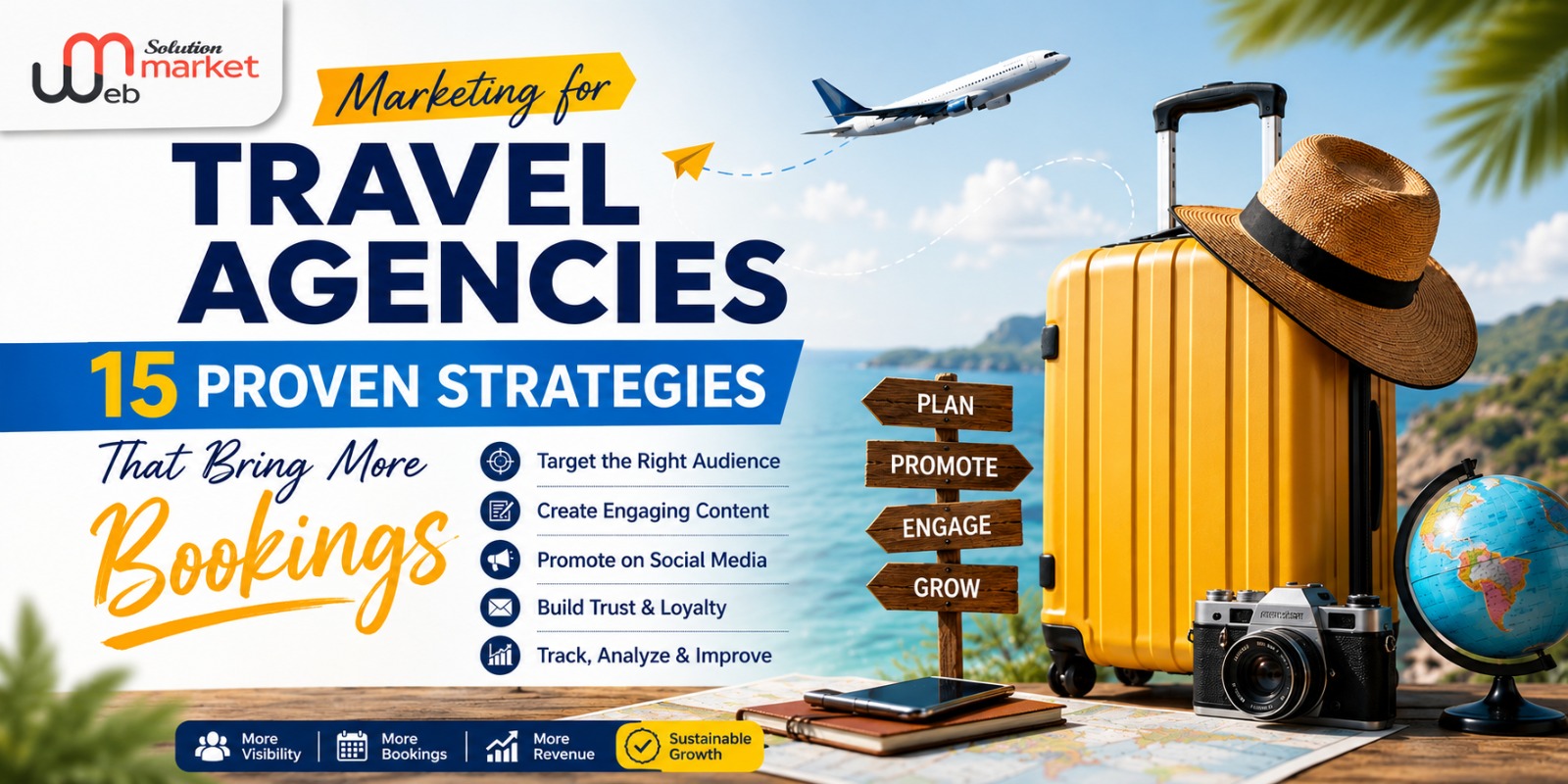
The travel industry has become more competitive than ever. Travellers have endless options when planning a holiday, business trip, honeymoon, or family vacation. Before making a booking, they compare prices, read reviews, browse social media, and visit multiple websites. If your agency isn’t visible during this process, potential customers will choose someone else.
That is why marketing for travel agency businesses is no longer optional. A well-planned marketing strategy helps you reach the right audience, build trust, generate enquiries, and increase bookings throughout the year.
Whether you are a local travel consultant, an online travel agency, or a tour operator, the right combination of SEO, Google Ads, social media, email marketing, and content can help you attract more qualified leads.
This guide shares 15 proven strategies that successful agencies use to grow their business while answering common questions about travel agency promotion.
Every successful business starts with a plan. Instead of trying every marketing channel at once, focus on building a practical marketing strategy for travel agency growth.
Your strategy should define:
Without a strategy, marketing often becomes inconsistent, leading to wasted time and advertising spend.
Many agencies search for a marketing strategy for travel agency PDF as a starting point. While templates can help, your strategy should always reflect your business goals, target audience, and competition.
Your website should do more than showcase destinations. It should encourage visitors to contact you or request a quote.
A high-converting travel website should include:
If visitors struggle to find information, they will leave and book with another agency.
Search Engine Optimisation helps your website appear when people search for travel services on Google.
Strong SEO includes:
Instead of relying only on paid advertising, SEO creates long-term visibility and consistent organic traffic.
For example, your agency can rank for destination-based searches, honeymoon packages, visa assistance, family holidays, cruise vacations, and adventure tours.
Content marketing builds trust before customers contact you.
Instead of constantly selling packages, educate travellers by publishing useful information.
Some effective travel marketing ideas include:
Helpful content positions your agency as an expert while improving your search rankings.
Some people are ready to book immediately.
Google Ads helps you appear when users search for:
Unlike social media, Google Ads targets people who already have buying intent.
With proper keyword targeting, compelling ad copy, landing pages, and conversion tracking, Google Ads can generate enquiries quickly while complementing your SEO efforts.
Many successful agencies combine multiple marketing channels instead of relying on just one.
Some common marketing for travel agency examples include:
These strategies work together to attract travellers at different stages of the buying journey.
Not every marketing strategy requires a large budget. If you’re just starting out, there are several free marketing for travel agency techniques that can help build visibility:
These methods require time and consistency but can generate steady enquiries over time.
Many agencies offer similar packages, so finding ways to differentiate your business is important. Here are a few creative travel agency ideas:
Small improvements in customer experience can lead to more referrals and repeat bookings.
One of the most common questions travel business owners ask is how to promote a travel agency on social media. Social media helps you inspire potential travellers, showcase destinations, and stay connected with your audience.
Focus on platforms where your customers spend the most time, including Facebook, Instagram, TikTok, LinkedIn, and YouTube.
Share content such as:
Consistency matters more than posting every day. A content calendar helps you stay active without overwhelming your audience.
Travellers rarely book without checking reviews first.
Positive reviews on Google, Facebook, and travel platforms increase credibility and improve conversion rates.
Encourage every satisfied customer to leave a review after completing their trip.
Reply to both positive and negative reviews professionally. This shows future customers that you value feedback and provide excellent customer service.
Reviews also strengthen your local SEO efforts and improve your visibility in Google Search and Google Maps.
Many visitors don’t book during their first visit.
Email marketing helps bring them back.
Build an email list by offering:
Send newsletters featuring:
Email marketing keeps your agency top of mind and encourages repeat bookings.
If you serve customers locally, your Google Business Profile is one of your most valuable marketing tools.
Keep it updated with:
Publishing regular Google Business Profile updates also helps improve visibility for local searches.
This strategy supports both SEO and travel agency promotion, making it easier for nearby customers to find your business.
Video is one of the most engaging content formats in the travel industry.
Travellers want to see destinations before they book.
Create videos featuring:
Short-form videos on Instagram Reels, TikTok, Facebook Reels, and YouTube Shorts can significantly increase engagement and brand awareness.
There isn’t a single strategy that works for every agency. The best marketing for travel agency businesses combines multiple channels to attract customers at every stage of the buying journey.
A balanced marketing plan typically includes:
When these channels work together, your business benefits from increased visibility, stronger brand trust, and more qualified enquiries.
Successful travel agency promotion goes beyond posting occasional discounts.
Consider these proven ideas:
Promotions work best when paired with valuable content instead of focusing only on sales.
Strategic partnerships help you reach new customers without relying entirely on paid advertising.
Collaborate with businesses that serve similar audiences, such as:
These partnerships create opportunities for referrals, joint promotions, and package deals that benefit both businesses.
For example, a honeymoon travel package promoted alongside a wedding planner can generate highly qualified leads.
Blogging remains one of the most effective long-term marketing strategies for travel agencies.
Instead of writing only about your services, create helpful content around destinations and travel planning.
Popular blog topics include:
This approach supports SEO, answers customer questions, and positions your agency as a trusted travel expert.
Fresh content also gives Google more pages to index, helping your website rank for a wider range of search queries.
Many visitors aren’t ready to book immediately, but they may be willing to exchange their email address for something valuable.
Examples of effective lead magnets include:
Offering useful resources helps grow your email list while building trust with potential customers.
Marketing decisions should be based on data rather than assumptions.
Use tools such as Google Analytics and Google Search Console to measure:
Regular reporting helps identify what is working and where improvements are needed.
If a campaign generates traffic but few enquiries, review your landing page, call-to-action, or booking process.
The travel industry changes constantly. Customer behaviour, search trends, and advertising platforms continue to evolve.
Successful agencies regularly test:
Continuous optimisation helps improve lead quality and increase bookings over time.
Rather than chasing every new marketing trend, focus on strategies that consistently produce measurable results.
The best approach combines SEO, Google Ads, content marketing, social media, email marketing, and customer reviews. Using multiple channels helps attract travellers at different stages of their buying journey.
Some proven ideas include publishing destination blogs, running Google Ads, creating travel videos, improving local SEO, building an email list, collecting Google reviews, and sharing customer experiences on social media.
Start by identifying your target audience, defining your business goals, setting a marketing budget, choosing your marketing channels, and tracking key performance indicators. Review your strategy regularly and make improvements based on results.
Focus on creating valuable content instead of constantly promoting offers. Share destination guides, customer testimonials, travel tips, videos, behind-the-scenes content, and limited-time promotions. Engage with your audience by responding to comments and messages.
Small agencies should prioritise local SEO, Google Business Profile optimisation, blogging, email marketing, referral programmes, customer reviews, and organic social media. These channels provide long-term value without requiring a large advertising budget.
Effective marketing for travel agency businesses requires more than occasional promotions or discounted packages. Sustainable growth comes from combining SEO, Google Ads, content marketing, email campaigns, social media, local SEO, reputation management, and a website designed to convert visitors into customers.
The most successful travel agencies consistently publish helpful content, optimise their online presence, track performance, and adapt their marketing based on customer behaviour and industry trends. By implementing the strategies in this guide, you can build trust, increase visibility, attract qualified leads, and generate more bookings throughout the year.
If you’re looking for a trusted partner to help grow your travel business, Web Market Solutions in Oakville is here to help. We provide SEO, Google Ads management, website design and development, local SEO, content marketing, and digital marketing strategies tailored specifically for travel agencies across Canada. Our team focuses on attracting qualified leads, increasing online visibility, and turning website visitors into paying customers. Whether you’re launching a new agency or expanding an established one, we’ll create a marketing strategy that supports your long-term growth. To discuss your goals or request a free consultation, email us at webmarketsols@gmail.com or call +1 (647) 546-6655. We look forward to helping your travel agency generate more enquiries and bookings.